Jordan had been on our ‘wish list’ for a long time. The stunning images of Petra will be known to many Travel Samplers. And they are just the start of what Jordan offers anyone with an appetite to explore.
Trade routes and migrating people have flowed through Jordan since ancient times. Today, Jordan is recognised as more stable and liberal (at least to our Western eyes) than some of its neighbours, and as a business centre (for example, the Arab Bank is headquartered in Amman). Jordan’s history offers up incredible UNESCO world heritage sites and its landscape so much more than Lawrence of Arabia (the film) might suggest. Lawrence of Arabia really was a British officer, posted for a number of years in the area we know today as Egypt, Jordan, Israel and Lebanon – more about his life and involvement here.
To address any initial questions about visiting Jordan and safety – Jordan is recognised as more stable and liberal than some of its neighbours. We flew into the modern and efficient Queen Alia International Airport, in October 2023, just prior to the Israel-Gaza conflict. We had previously arranged a ‘Jordan Pass’ that included an eVisa, and entry to many local sites of interest which made visiting seamless and easy.
‘…The places allowed with a Jordan Pass include UNESCO world heritage sites such as Petra, Jerash, Wadi Rum, Quseir Amra, Umm Ar-Rasas, Amman Citadel, and others. If a traveller stays in Jordan for more than 4 days (3 nights), their Jordan Pass fees also include the cost of the Jordan e-Visa that permits them to enter the country legally’.
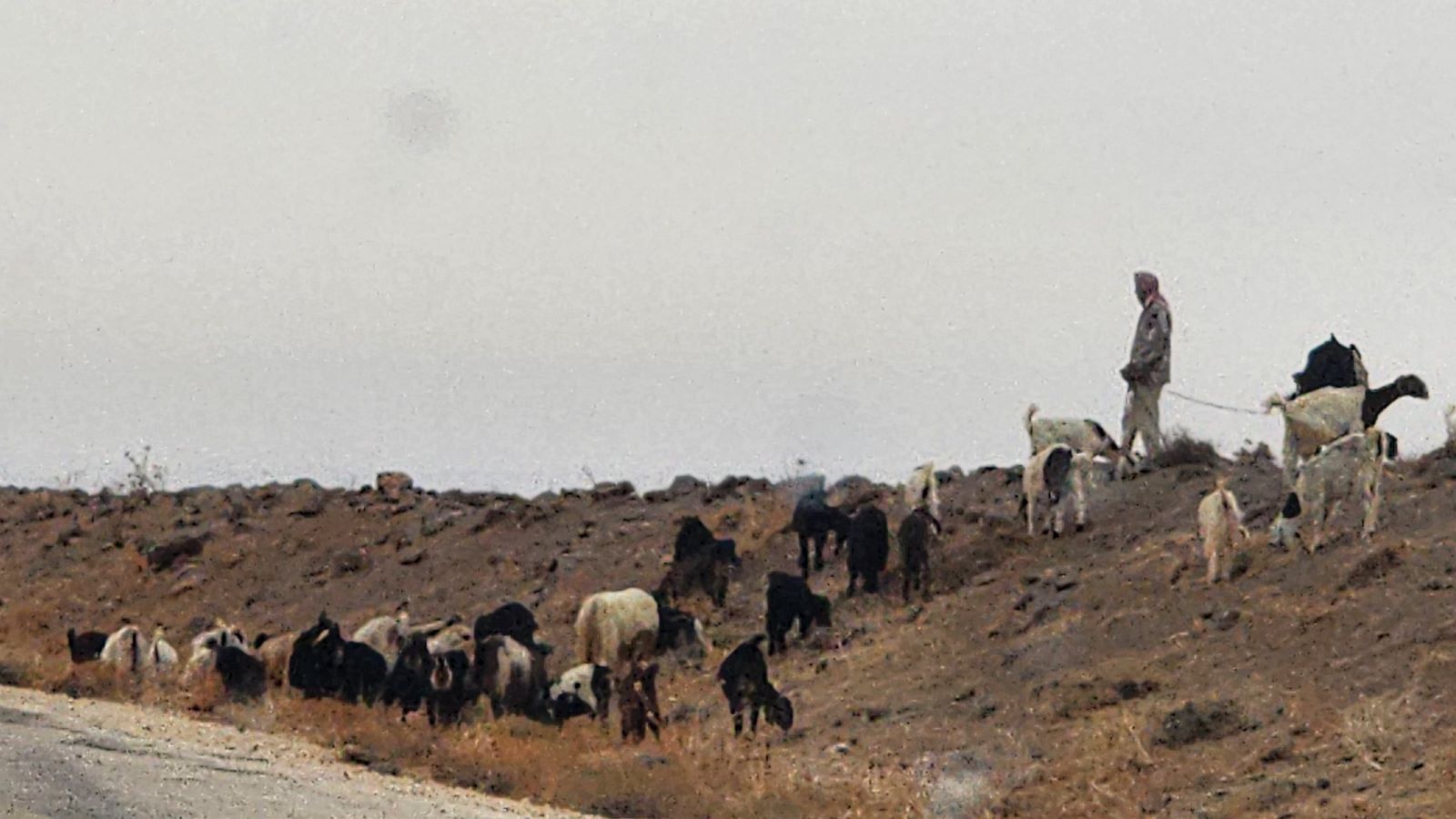
Our flight landed around midnight, and we were able to pick up our pre-booked hire car quickly and efficiently. There are money exchange facilities and ATMs in the airport. Not all stores, restaurants or hotels accept cards, so we found some cash was necessary in Jordan. We relied on Google Maps to navigate our way to our hotel and throughout our stay, which proved reliable and up to date. A word on traffic – highways are modern and well-made although may not have line-marking. In city areas, lighting may be limited, some streets will be narrow and winding and around Amman, hilly. In country areas you may come across goats and donkeys on the road – be aware and slow down.
We did not feel unsafe at any time, although we did see armed security guards, mirror-checks under our car, and multiple checkpoints (which we were waved through). As always, check your country of origin’s travel advice before going, and be respectful of local customs including women covering bare shoulders and legs. Have a headscarf available should you visit a religious site requiring it. Everywhere we went, there was plenty of English spoken and often signage was also displayed in English.
Tell us about your experience of Jordan at ideas@travelsampler.world
Jordan’s biggest city and capital Amman is at a crossroads in the Middle East. People have lived in this area for thousands of years, BC. It’s said that Amman doesn’t have an ‘indigenous’ population – that is, people living here have origins across the Middle East and beyond. Today, more than 4 million people call this bustling city home.
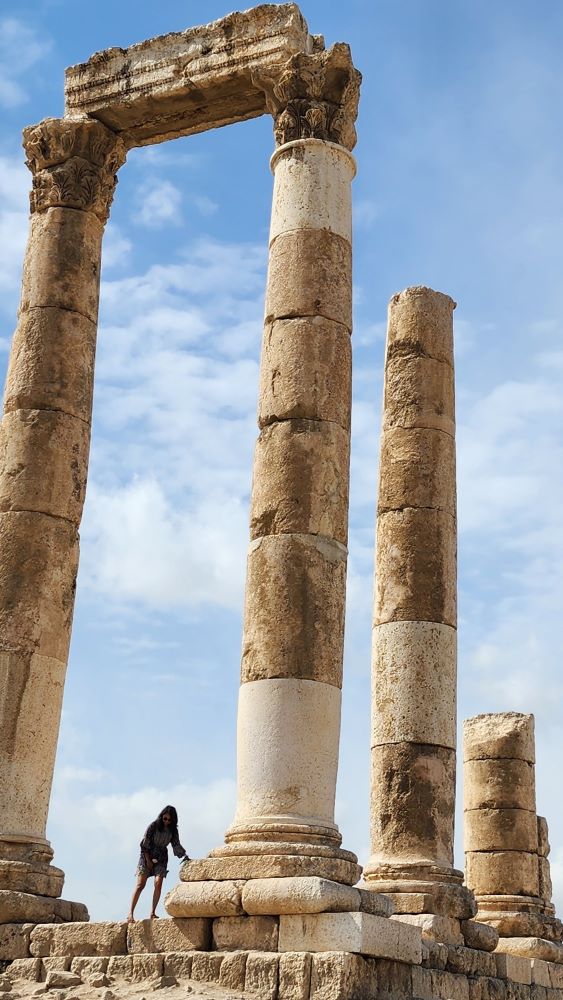
The Citadel lies at the heart of Amman, on a peak overlooking the city. Changes in control of the city over the centuries mean there are both Muslim (Umayyad Palace) and Roman (Temple of Hercules) ruins in the Citadel. The small but interesting Jordan Archaeological Museum is located here as well.
We appreciated the 360 degree views over Amman, which gave us perspective on the scale and density of the city. The view included the Roman Theatre, located right in the middle of the city. The ruins here in Amman and at Jerash are surrounded by commerce and the busy-ness of modern life, a time defying leap forward from the ancient sites sitting alongside.
There’s much to sample Beyond Amman.